Physical Address
304 North Cardinal St.
Dorchester Center, MA 02124
Physical Address
304 North Cardinal St.
Dorchester Center, MA 02124

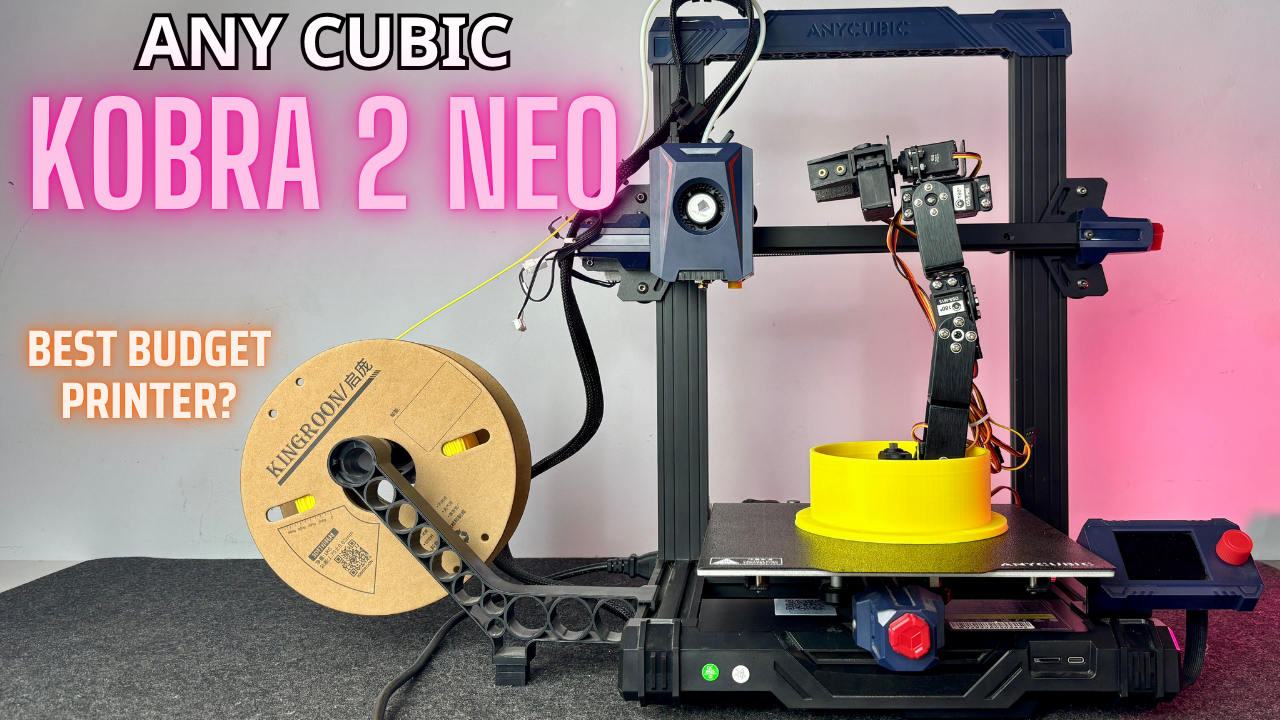
My Overall Experience with the Anycubic Kobra
After spending a decent amount of time with the Anycubic Kobra, I’d describe it as a printer that’s clearly built with ease of use in mind, but without feeling overly cheap or limiting. It’s the kind of machine that doesn’t intimidate you when you first unbox it, yet still feels capable enough once you start pushing it a bit.
This isn’t a printer that tries to reinvent everything. Instead, it focuses on getting the fundamentals right, which honestly matters more than flashy features when you just want to print things reliably.
One of the first things I appreciated about the Kobra was how quick it was to set up. Assembly didn’t feel like a chore. Within a short amount of time, the machine was powered on and ready to go.
The automatic bed leveling worked well in my case and removed a lot of the usual frustration that comes with manual leveling. I didn’t have to fight with knobs or re-level the bed over and over just to get a decent first layer. For beginners especially, this makes a big difference.
Build quality is decent overall. Nothing feels premium, but nothing feels fragile either. It’s solid enough to inspire confidence when the printer starts moving fast.
Anycubic claims printing speeds of up to 180 mm/s, and while that number sounds impressive on paper, I personally see it more as a theoretical maximum. In real use, I found that the printer performs best at slightly lower speeds where things remain stable and predictable.
That said, compared to many older Cartesian-style printers, the Kobra does feel noticeably quicker. Prints start smoothly, movements feel controlled, and I didn’t run into skipped steps or strange mechanical noises when running longer jobs.
For everyday printing, the speed feels more than adequate, especially if you’re coming from an older or slower machine.
Out of the box, print quality is good but not perfect. I did notice some stringing and minor surface issues at first, which isn’t surprising. After a bit of slicer tuning—mainly retraction and temperature—the results improved significantly.
Once dialed in, the Kobra produces clean surfaces and solid dimensional accuracy. Organic shapes, figurines, and decorative prints came out especially nice in my testing. Functional parts also held up well, with consistent layer bonding and no obvious weak spots.
It’s not a printer that gives you flawless prints instantly, but it responds well to tuning, which I personally prefer over a machine that hides everything behind locked profiles.
The spring steel PEI build plate is one of my favorite parts of the Kobra. Adhesion is strong when the bed is heated, and once everything cools down, parts pop off easily with a slight flex. That alone makes daily use much more enjoyable.
Combined with automatic bed leveling, first layers have been consistent across the entire plate. I didn’t feel the need to babysit prints just to make sure the first layer was sticking.
One thing worth mentioning is the PTFE-lined hotend. Because of that, I personally avoid running very high temperatures for extended periods. For materials like PLA and PETG, it’s completely fine, but if your main goal is high-temperature materials, this is something to keep in mind.
There are also a few small design choices—like cable routing and plastic components—that feel a bit budget-oriented. They don’t affect functionality right now, but long-term durability is something I’d keep an eye on.
Overall, my experience with the Anycubic Kobra has been positive. It’s a printer that gets you printing quickly, doesn’t demand constant attention, and delivers consistent results once dialed in.
It’s not aimed at power users who want extreme customization or cutting-edge features. Instead, it’s a solid, approachable machine for beginners and casual makers who want something that just works without too much hassle.
For its price and target audience, the Anycubic Kobra does its job well—and that’s really what matters most.